Wednesday, May 25, 2016

A Good American Treated by White House Like A Criminal

The Government’s Criminalization of “A Good American”

Shanna Devine, April 25, 2016
Friedrich Mosers’ new documentary, A Good American, details the courage and struggle of National Security Agency (NSA) whistleblower Bill Binney and his partners in committing the truth. Before there was Edward Snowden, there existed a team of senior NSA employees who devised a surveillance program called ThinThread that effectively identified terrorist threats and protected the privacy rights of innocent individuals. When it was replaced by a costly, ineffective and unconstitutional mass surveillance program, they resigned and blew the whistle through designated channels. As the film reveals, however, they were ultimately treated as if they committed a crime for reporting a crime.
recent letter by prominent good government groups calls on the Obama Administration to put an end to that practice by “prohibiting managers from pursuing or threatening prosecution of whistleblowers who use protected channels.”
- See more at: https://www.whistleblower.org/blog/110925-government%E2%80%99s-criminalization-%E2%80%9C-good-american%E2%80%9D#sthash.phO48289.dpuf

Monday, May 9, 2016

"Insider Threat Program" of Obama is a Threat to Whistleblowers

Dissent is Dangerous: Insider Threat Defense and “The Snowden Affair”

Matt Fuller, April 06, 2016
Foreword
In the aftermath of classified disclosures to Wikileaks, the Obama administration created an Insider Threat Program tasked with identifying the “malicious insiders.” In practice, however, we have found that the Insider Threat Program is really a threat to insiders who commit the truth – whistleblowers.
According to the Office of the Director of National Intelligence, “An insider threat arises when a person with authorized access to U.S. Government resources… uses that access to harm the security of the United States. Malicious insiders can inflict incalculable damage. They enable the enemy to plant boots behind our lines and can compromise our nation's most important endeavors.”
The initial creation of the Insider Threat Program included an explicit exemption for whistleblowers covered under the Whistleblower Protection Act (WPA) and Intelligence Community WPA. However, in the years since the program’s inception, government agencies and congressional officials have used insider threats and whistleblowers as interchangeable identities, causing an irreversible chilling effect amongst public servants who are considering reporting waste, fraud, abuse and other misconduct. Further, the whistleblower exception has vanished from official training materials and guidance on how agencies should implement the Insider Threat program.t
- See more at: https://www.whistleblower.org/blog/031006-dissent-dangerous-insider-threat-defense-and-%E2%80%9C-snowden-affair%E2%80%9D

Wednesday, May 4, 2016

List of Ronald Reagan Virtues on Facebook

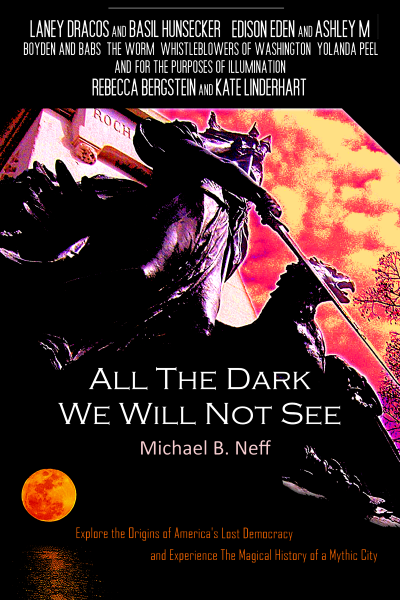
All The Dark
"In Reagan’s first three years as president, over 20 high-ranking EPA employees were removed from their positions and in some cases imprisoned. Perhaps the most roundly illegal of these scandals was a scheme to fix elections with taxpayer money, otherwise known as “Sewergate."
http://listverse.com/…/10-reprehensible-crimes-of-ronald-r…/
Although conservatives have recently tried to revive the image of former president and actor Ronald Reagan, his legacy includes details that are a little l
LISTVERSE.COM


Interview With Author Regarding "Tear Down This Myth" - A Book About The Reality of The Reagan Administration

Harpers Magazine Interview
This is from 2010 but indefinitely relevant to learning the reality of the Reagan White House.

Will Bunch is an award-winning senior writer for the Philadelphia Daily News and a senior fellow with Media Matters for America. His latest book, Tear Down This Myth: The Right-Wing Distortion of the Reagan Legacy, just out in paperback, examines the process by which Ronald Reagan was subjected to a makeover after his death. I put six questions to Will Bunch about the book.
1. Your book describes itself as a deconstruction of the myth of Ronald Reagan. But how successful has the effort at myth-making been? How does Reagan now stack up among the presidents among historians and the public in general?
bunch
It’s interesting–Reagan’s reputation has risen with both the public and historians the further we get in memory from his actual presidency–which I think is a huge tribute to both the myth-making machinery created by the likes of Grover Norquist and the mainstream media’s willingness to embrace the myth. For example, in March 1990, some 13 months after Reagan left the Oval Office, Reagan’s popularity (59 percent) had dipped below that of Jimmy Carter (62 percent). Two major surveys of historians in the mid-1990s rated Reagan’s presidency as below average, not one of the all-time greats.
[ more ]

A Film Based on a Scene in "All The Dark We Will Not See"


Author's Note Regarding "All The Dark We Will Not See"

All the Dark We Will Not See is a historical novel based on a true story that takes us back to 1984 Washington, D.C. It allows us to live a life both profound and pedestrian, yet frighteningly real, and at times, even surreal. The foundational circumstance is the aftermath of a major corporate siege that overthrew the city and planted its flags in full view of the Reagan White House. Many of us who worked in Washington watched it happen with a predictable sense of awe and foreboding. We all had tales to tell, tales that few outside the city would ever believe.

When the novel was first conceived many years later, serious issues presented themselves for consideration, first and foremost being point of view. It would be relatively simple to create a White House character for purposes of observing insider intrigue and criminality--a Reagan apostle like Peggy Noonan, for example. But given my own experience in the bowels of the Executive, and having observed and studied the trickle-down effect of White House psychology and political culture, I realized the story would be better served by adopting the viewpoint of those who were a few degrees removed from the rarefied air of the Oval Office. The story would be told not by characters who wielded power like narcissist sociopaths, but by those who lived daily with the consequences of it, and who either resisted or amplified that power for their own ends.

Everyone in 1984 Washington who opposed the Leviathan, who put their reputations and lives on the line regardless of political affiliation, did so not because they desired glory, but because they still believed in a world where right would win out. Most lived to be terribly disappointed, for "doing the right thing" rarely if ever made a difference during that era--now glossed over by many and made to appear like a Camelot interlude.

Regardless, despite their reversals and the drama played out during those years of turmoil, redemption and hope are found in the knowledge that real heroes struggled to do the right thing for us, however futile that struggle often became. Some succeeded, others failed, but their sacrifices and battles, their enemies and betrayers, as detailed in "All The Dark We Will Not See," reveal an injustice none of us can afford to ignore. As Dostoevsky once said, "Tyranny is a habit, it grows upon us."